Unlimited Potential | Dadly Does It Campaign
Unlimited Potential is a social enterprise based in Salford that works to improve people’s lives and communities through innovation, behaviour change and community-led programmes.
They create and deliver initiatives that tackle disadvantage, build confidence and support better health and well-being, particularly for people who are often overlooked or underserved.
The brief
Dadly Does It is an initiative created by Unlimited Potential, aiming to find new ways to improve the well-being of fathers from backgrounds of severe and multiple disadvantage, and to understand whether this could also improve the well-being of their children. Complementing existing work with mothers, the project sought to reduce the proportion of children and young people experiencing the root causes of severe and multiple disadvantage.
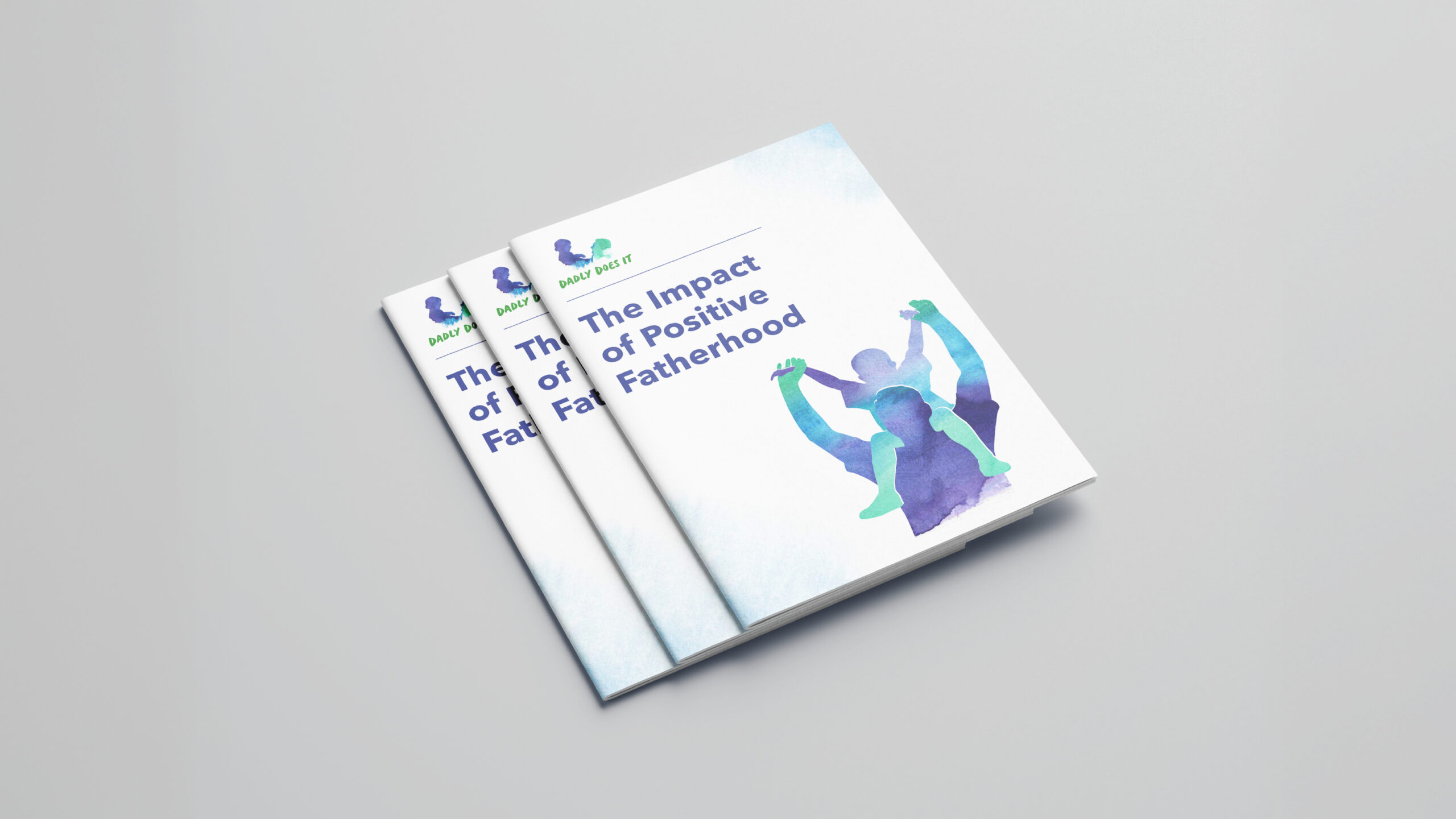
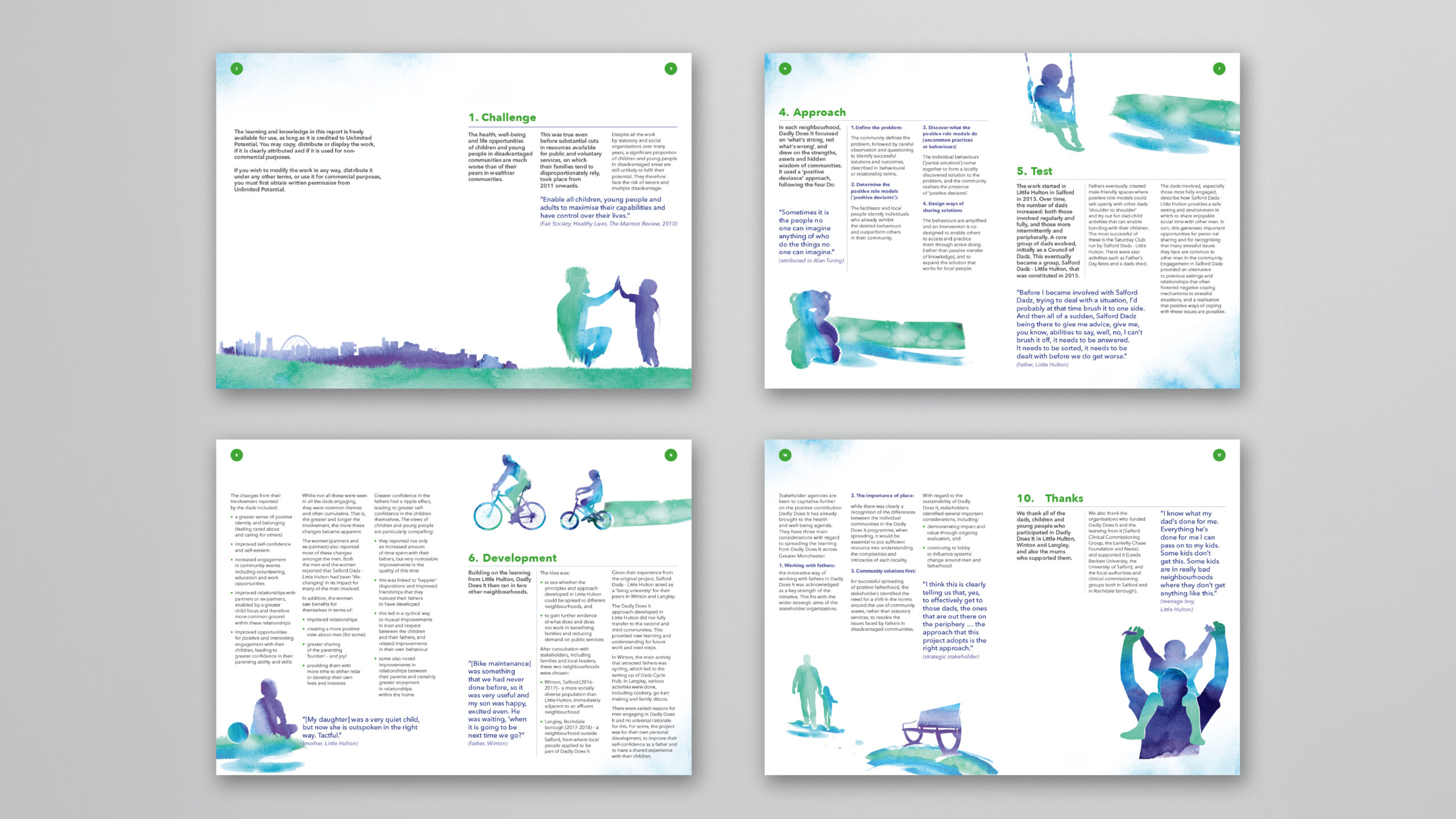
Unlimited Potential commissioned us with the exciting challenge of finding effective ways to share the valuable insights from the Dadly Does It project. The project presented a unique opportunity, as we needed to engage a wide range of audiences — from traditional influencers like commissioners, local authorities, and the NHS in Greater Manchester, to grassroots influencers such as dads and families from local communities.
Our creative approach
To address this, we adopted a co-production approach, bringing together citizens and professionals to collaborate. Our proposal was to host a workshop to define both the specific deliverables for the project and the overall creative direction for the brand.
Ideas included developing a mini website to house key learnings from the project, contributed by fathers involved in the initiative, as well as partners like Unlimited Potential and the Langkelly Chase Foundation. The result was the creation of a distinctive design language and brand identity for the project, shaped by stakeholder input and guided by the collaborative nature of the workshop.
Results and impact
The impact of the Dadly Does It Campaign has been huge. The learnings have been recognised by positive fatherhood being included in the 0-25 plan in Salford and planning for school readiness in Greater Manchester. It has also been referenced as a part of the BBC Learning’s early years initiative as well as receiving multiple awards and nominations. Most importantly, it has helped shift conversations about fatherhood, highlighting the link between fathers’ well-being and better outcomes for children.